Before buying lift kits and truck accessories in Reading, choose between a leveling system and a complete suspension lift. A leveling upgrade corrects factory rake while preserving daily manners, and a suspension lift adds clearance, wheel travel, and bigger tire options. Collect precise year, trim, drivetrain, and suspension specs to confirm Rough Country fit. Plan for tires, alignment, and add-ons like steps, lights, or liners—you'll understand how the ideal setup comes together.
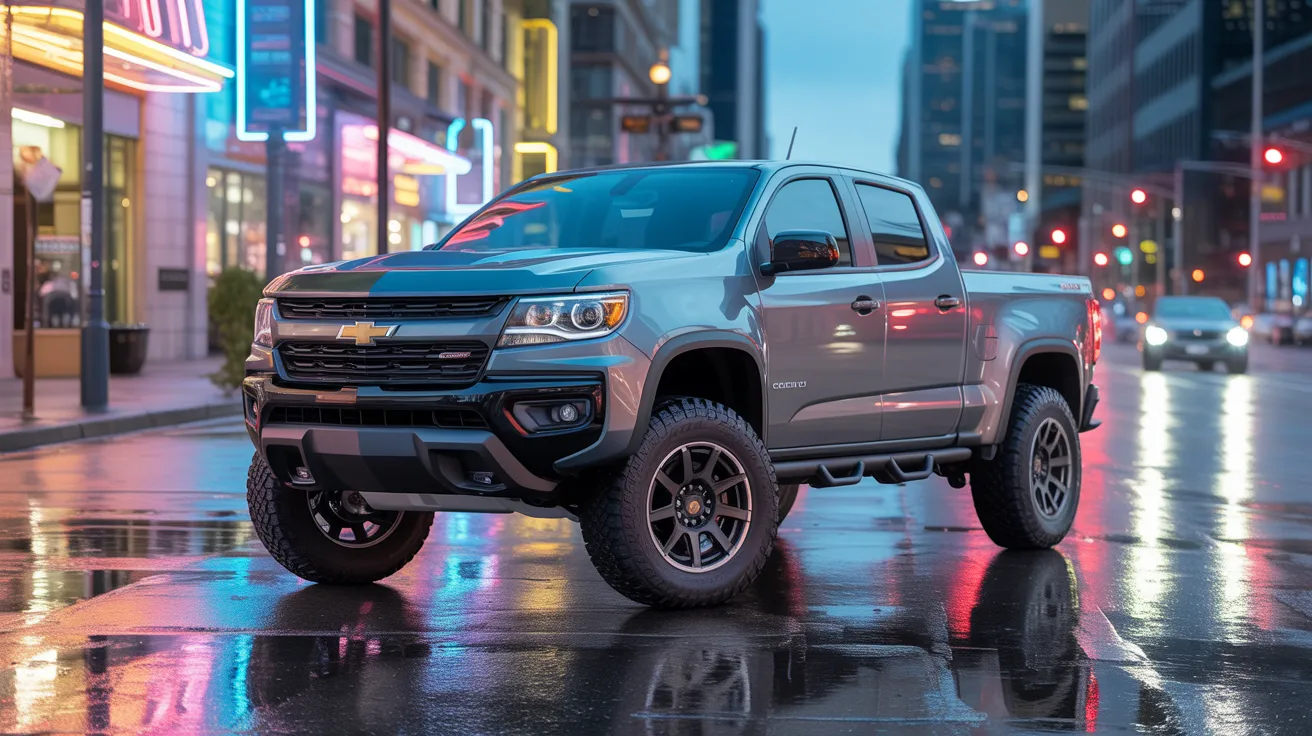
Key Takeaways
- Choose a leveling option to remove factory rake while keeping near-stock handling and fitting bigger tires for daily driving.
- Go with a suspension lift for better clearance, wheel travel, and off-road performance, recognizing steering and handling may change.
- Validate proper fitment using your truck's year, make, model, drivetrain, trim, cab, bed, and suspension package prior to ordering your Rough Country parts.
- Pair lift height and shocks to your driving needs, whether commuting, doing trail work, towing, or serious off-road travel.
- Reserve money for beyond the kit price alone, with costs for alignment, labor, wheels, tires, shocks, and supporting accessories like steps, lights, and liners.
Suspension Lifts versus Leveling Kits
Since both upgrades affect your truck's stance, leveling kits and suspension lift kits address different issues and offer varied outcomes. A leveling kit generally raises the front to match the rear, correcting factory rake with minimal change to geometry, ride height, and daily drivability. You go with one when you desire a cleaner profile and room for bigger tires.
A suspension lift elevates the whole truck and changes key components to provide more ground clearance and wheel travel. You'll see larger advantages in ride height, off-road capability, and tire fitment, yet you should expect handling tradeoffs, steering changes, and a higher center of gravity. When you prefer mild visual correction, use a leveling kit. If you need genuine clearance and articulation, apply a suspension lift and plan the supporting mods around your use case.
Find the Rough Country lift kit that matches your truck.
Kick off by gathering your truck's year, brand, and model, transmission setup, and planned use, as Rough Country develops lift kits around exact platform geometry and capability targets. That foundation tells you which mounting hardware and suspension pieces will mount properly without fitment or geometry problems.
Start by reviewing original ride height, cab and bed configuration, axle configuration, and if your truck uses 2WD, 4WD, or adaptive suspension. Rough Country fitment resources simplify this process, but you still need to confirm model compatibility against trim-level parts and factory package variations. A kit engineered for a Silverado 1500 may not fit a Trail Boss, and a Ram featuring air suspension requires different accommodations rather than a vehicle with coil suspension. By confirming exact fitment upfront, you avoid unexpected problems, hardware conflicts, and reshipment delays.
Which Rough Country lift kit suits your driving style?
Align the kit with your actual driving habits, and you'll enjoy superior ride quality, durability, and clearance for larger tires without paying for features you won't need. If you primarily commute in your truck, go with a basic Rough Country leveling kit or a 2- to 3.5-inch suspension setup designed for commuting comfort and predictable steering behavior.
If you split time between pavement and trails, upgrade to a suspension lift that includes premium shocks and corrected control arm angles. You'll achieve improved trail handling, better articulation, and capacity for bigger tires without overstressing factory components. For serious trail work, select raised struts, Rough Country N3 or Vertex dampers, and kits that maintain driveline angles under compression. The correct Rough Country kit should match cargo load, speed, and terrain, and your tolerance for ride stiffness.
Premium Rough Country Truck Accessories
Enhance your lifted truck with Rough Country aftermarket items that address the real weak points you'll discover after the lift, new tires, and stance change. Go with improved entry steps or rock sliders, that bring back entry to the cabin and offer lower-vehicle protection when your truck sits higher and wider.
Next, prioritize view and handling. Rough Country LED light bars extend visibility range on dark trails, job sites, and rural roads without complicated integration. Seat covers and floor liners protect inside surfaces from mud, stones, and water you'll carry in after off-roading. Flare kits reduce wheel spray and enhance the wider profile provided by larger rubber. For hauling and rescue use, commercial-grade hitches, tow hooks, and winch-ready bumpers contribute functionality without impacting compatibility. Choose products that align with your lifted truck's dimensions and usage demands.
How Much Budget Do You Need for Your Build?
After you've selected the suspension system and supporting accessories, create a budget exceeding the listed kit price. You'll require money for shocks, wheel rims, tire set, wheel alignment, installation labor, and any drivetrain or steering upgrades your platform requires. Company reputation plays a role here; luxury kits generally provide better precision, better ride quality, and fewer install headaches.
For accurate cost estimates, expect budget-friendly spacer or leveling kits to start at the bottom, while complete suspension setups featuring control arms, tuned shocks, and oversized tires escalate rapidly. Install difficulty, shop rates, and calibration work can add substantially. You should also price additional upgrades such as gear modifications, brake parts, and recovery equipment if you plan to use it off-road. If budget is a concern, evaluate payment plans carefully and prioritize dependability over flashy add-ons.
Popular Questions About Lifts
Do Lift Kits Impact Factory Warranty?
Yes, suspension kits can affect your factory warranty coverage, but they won't automatically cancel it. You face warranty implications if a dealer proves the lift kit caused or contributed to a malfunction. Powertrain, steering, suspension, and drivetrain claims often trigger dealer disputes. You ought to maintain installation records, use quality components, and follow service intervals. That helps you challenge denied claims and maintain protection in cases where the modification didn't cause the problem.
Does Going Bigger Require Gear Changes?
Yes—if you jump several tire sizes, you'll often require re-gearing. For instance, when switching from 31s to 35s, your truck can feel sluggish, shift improperly, and build drivetrain stress under load. Adjusting gears reestablishes optimized gear ratios, enabling you to restore acceleration, towing performance, and transmission behavior. You may skip it for a minor upsizing, however, if power, fuel economy, or shift quality drop, it's typically the best option.
When Should You Check Your Lift Kit?
You should inspect lift kit components once 500 miles are reached, subsequently at every oil change or 3,000 to 5,000 miles, subject to use. Periodic inspections assist you in catch bushing wear, shock leaks, bracket damage, and alignment issues soon. Test bolt tension after hard off-road runs, towing, or impacts. When operating in mud, salt, or rough terrain often, reduce timing between inspections and look at suspension and steering components on a tighter schedule.
Does a lift kit alter your vehicle's towing and payload limits?
Yes, a lift kit can alter your towing and payload capacity. When you elevate ground clearance for more ground clearance, you change suspension geometry, gravitational center, and leverage on components. That can decrease stability under load and increase drivetrain stress, particularly when using larger tires. You should follow your OEM ratings unless an certified engineered kit clearly details upgraded ratings. Proper alignment, gearing options, and brake effectiveness are also critical.
Should alignment checks occur following installation of truck modifications?
Yes—if attachments adjust ride height, suspension structure, steering angles, or tire measurement, you must have an alignment. You'll feel the theory fast: tiny shifts can pull your truck off-center, wear down tread, and compromise handling. A quality alignment restores camber angle value, caster, and toe to spec. After certain modifications, you should also arrange brake system calibration for driver-assist accuracy. You extend tire lifespan, steering precision, and real-world safety by checking alignment immediately.
Wrap-Up
Picking the ideal suspension setup and accessories copyrights on how you use your truck, what stance you want, and what your budget can handle. When you match a Rough Country lift kit with your driving style, you'll check this get performance, clearance, and looks that work together as efficiently as a calibrated engine. Combine intelligent upgrades, plan your spend carefully, and you'll build a pickup which becomes reliable for streets, powerful off-road, and ready for whatever job comes next.